
Is Algorithmic Trading Better Than Manual Trading?
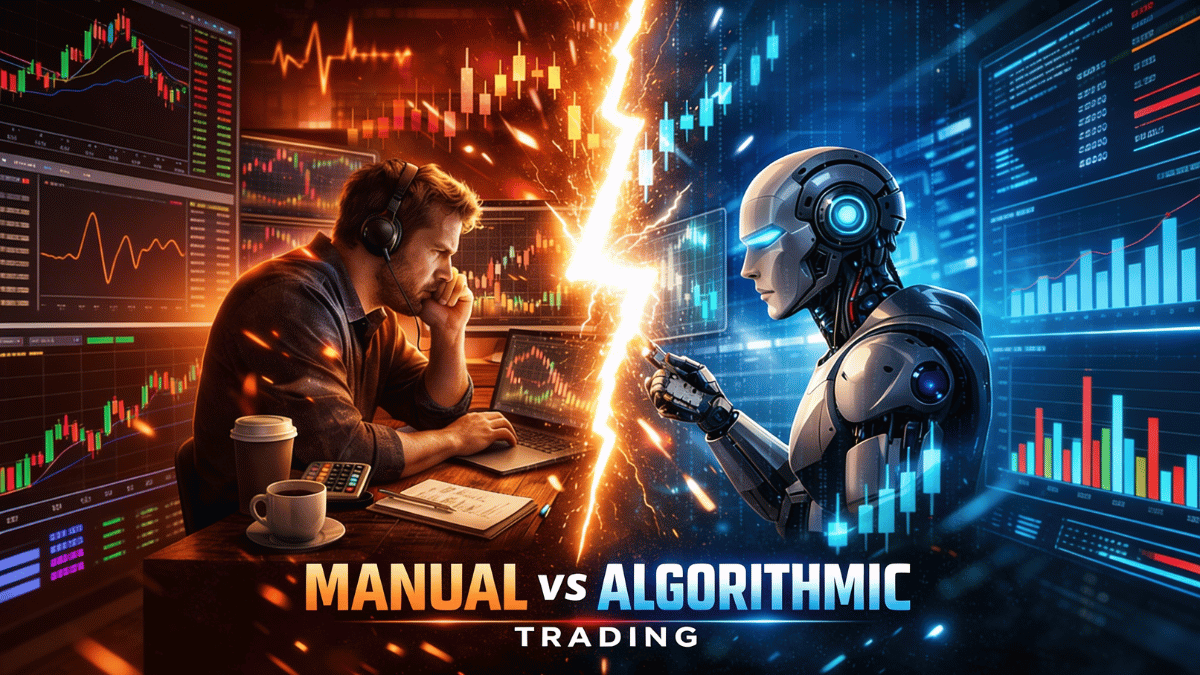

In today’s fast-evolving financial markets, traders face an important choice: stick with traditional manual trading, or embrace algorithmic trading powered by automation, data, and speed. With automation shaping the future of trading, understanding both approaches is essential for anyone looking to succeed in 2026 and beyond. In this blog, we will explore the key differences, advantages, and limitations of algorithmic vs. manual trading and help you decide which method aligns with your goals.
Manual trading is the traditional method where a trader analyzes charts, news, and indicators to make buy and sell decisions in real time. This process relies entirely on human judgment, intuition, and experience. Traders make decisions based on interpretation of market trends, patterns, and changing economic conditions — adjusting positions as they go.
Manual trading requires deep market knowledge and continuous monitoring, but it gives full control to the trader and flexibility to adapt to unexpected events — something machines might miss. Expert traders often use intuition to respond to sudden market volatility or breaking news that algorithms aren’t programmed to handle.
Algorithmic trading frequently called algo trading uses software programs to execute trades based on predefined rules. These rules can include price levels, timing, volume, and other market signals. Once conditions are met, the algorithm automatically places orders without human intervention.
Algorithmic systems can be simple rule-based logic or highly advanced machine-learning-powered models. What they have in common is speed, consistency, and the ability to operate across multiple markets simultaneously — something human traders can’t do efficiently.
| Feature | Manual Trading | Algorithmic Trading |
|---|---|---|
| Execution Speed | Slow (seconds to minutes) | Fast (milliseconds) |
| Emotional Bias | High (fear, greed risk) | None — rule-based execution |
| Scalability | Limited | High — multi-market execution |
| Flexibility | Highly adaptive | Limited to programmed rules |
| Technical Skill | Low | Medium to High |
| Monitoring | Constant human oversight needed | Can run autonomously |
Algo systems can analyze data and execute trades in milliseconds, far faster than any human could. This speed advantage means capturing fleeting opportunities that manual traders may miss.
One of the biggest flaws of manual trading is emotion, fear and greed that lead to premature exits, chasing losses, or inconsistent risk management. Algorithms strictly follow logic and rules, eliminating emotional bias.
Once a trading strategy is coded into an algorithm, it performs consistently regardless of market conditions, trader mood, or external stressors. This discipline can improve long-term results.
Algos can monitor and trade multiple instruments at once stocks, currencies, commodities, and indices simultaneously. A trader operating manually is restricted by personal focus and time capacity.
Algorithmic strategies can be back tested on historical data to refine performance before live deployment, reducing guesswork and increasing confidence.
Despite its advantages, algorithmic trading isn’t foolproof:
Algorithms execute based on predefined logic. During black-swan events like geopolitical crises or sudden earnings surprises, they can be slow to adapt.
Algo trading often requires technical infrastructure, back testing tools, and sometimes coding knowledge though no-code platforms are easing this barrier.
System bugs, internet outages, or hardware failures can cause erroneous trades or missed opportunities. Algorithms depend on stable technology.
While automation continues to rise, manual trading still has important strengths:
Experienced traders can interpret news, market sentiment, and unusual patterns — adapting their strategies in real time.
Manual trading doesn’t require programming skills or APIs. Anyone with basic charting knowledge can begin.
Some traders thrive on making real-time decisions and adapting their strategies without being constrained by algorithms.
Industry trends show a growing shift toward automation. With sophisticated algorithms analyzing market data, executing orders, and managing risk around the clock, many traders see automation as a competitive edge in modern markets. Experts even argue that traders relying purely on manual approaches in 2026 are at a significant disadvantage like showing up to a race on a bicycle while others have high-performance machines.
Platforms and marketplaces for algo trading are also making it easier for retail traders to participate in automation without needing deep coding knowledge, democratizing access to powerful tools that were once available only to institutions.
There’s no One-Size-Fits-All answer — it depends on your goals, skills, time, and trading style:
Many traders are now adopting a hybrid approach using manual analysis for strategy ideas and automation for execution. This combines human intuition with algorithmic precision, offering the best of both worlds.
Both manual and algorithmic trading have their place in modern financial markets. Manual trading provides flexibility and human insight, while algorithmic trading delivers speed, discipline, and scalability. With automation becoming more accessible and powerful in 2026, many traders increasingly rely on algorithms to stay competitive.
Ultimately, the “better” approach isn’t universal — it’s personal. Your trading goals, risk tolerance, and preferred strategy will dictate the right choice for you.
Note: This article references publicly available materials, including “Algorithmic Trading vs Manual Trading — TradingView Comparison” by tradingview.com and “Algo Trading vs Manual Trading: Why Automation Wins in 2026” published on the tradetron.tech. Landmark Markets has reviewed and summarized these sources to support the discussion presented in this article.
Disclaimer: This article is for informational purposes only and should not be considered as financial or investment advice. The views and data presented are based on publicly available information and may change without notice. Investing in financial markets involves risk, including the possible loss of capital. Past performance is not indicative of future results. Readers should do their own research or consult a qualified financial advisor before making any investment decisions. The author and publisher are not responsible for any losses arising from the use of this information. T&Cs apply. For full terms and conditions, please visit landmarkmarkets.com.